
How We Built the Only STEM Education Model That Guarantees a 600:1 Multiplier Effect
Most education programs operate on a 1:1 model.
One donor supports one student. One teacher teaches one classroom. When the funding ends, the impact often stops too.
At WAAW Foundation, we built something fundamentally different.
Every scholar we support becomes a mentor who reaches hundreds of students every year. This isn’t a projection or a hopeful estimate—it’s a system designed to multiply impact by default. And the data proves it works.
The Numbers Don’t Lie
Since inception, WAAW Foundation has reached 63,570 students across 29 African countries.
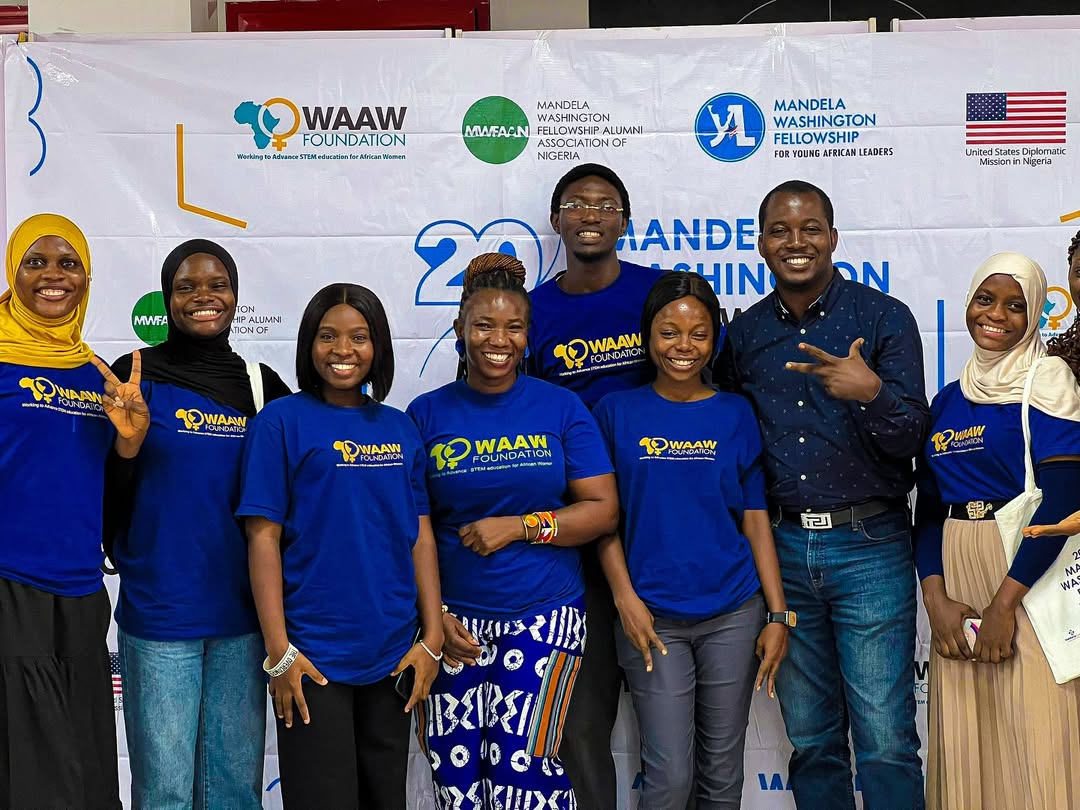
This impact wasn’t driven by a massive staff or an enormous budget. It was powered by 1,512 university students trained as fellows and mentors through our programs.
Each fellow conducted an average of six to eight outreach sessions during the year. Every session reached between fifty and one hundred secondary school students. When you put those numbers together, the result is tens of thousands of young people exposed to STEM learning, role models, and real possibilities.
On average, each fellow reached 42 students in one year and that number compounds annually.
But the real story is how this multiplier effect is intentionally built into everything we do.
How the Multiplier Effect Actually Works
Traditional scholarship models typically focus on individual outcomes. A student receives funding, completes their education, and the impact often ends there.
WAAW’s approach is different. One scholarship doesn’t just fund tuition, it activates leadership.
A single investment supports a scholar who is trained as a mentor, embedded in a university chapter, and required to conduct outreach in nearby secondary schools. Over the course of three years, that one scholar reaches 600 or more students through structured, documented STEM outreach.
The result is a dramatic shift in cost effectiveness. Instead of thousands of dollars impacting a single student, the same investment reaches hundreds — sometimes more — through mentorship, peer learning, and community engagement.
And unlike traditional programs, the impact doesn’t stop at graduation. Many of our 196 scholars and alumni continue mentoring years after completing their degrees.
Putting the Impact in Perspective
63,570 students reached to date.
That’s more than the combined enrollment of Stanford University (17,000) and MIT (11,000).
113 active university chapters
More campus locations than most multinational retail chains operate in Africa.
29 African countries with active programs
More countries than Starbucks currently operates in across the African continent (they’re in 6).
1,512 trained fellows leading programs
A larger volunteer workforce than most international NGOs deploy in Africa.
We didn’t build this overnight.
It took years of testing, failing, learning, and refining.
Now we have a proven model that scales without sacrificing quality.
The Three Elements That Make the Model Work
Peer-to-Peer Mentorship
We don’t rely on external experts or imported facilitators to teach STEM. Instead, we train university students who are only a few years older than the secondary school students they mentor.
When a 20-year-old engineering student from Lagos teaches robotics to a 15-year-old girl in the same community, something powerful happens. The lesson goes beyond content. The student sees herself in the mentor and begins to believe that a STEM future is possible.
This relatability is impossible to manufacture through curriculum alone. It’s lived experience, shared context, and proximity.
As a result, 72% of the students reached through our outreach sessions are girls, and 72% of those girls report increased interest in pursuing STEM after just one session.
Mentorship Is Required
Every WAAW scholar signs a commitment agreement. Conducting outreach sessions isn’t encouraged, it’s required.
This isn’t about pressure. It’s about culture.
Optional volunteer programs tend to attract only the already-motivated few. Required mentorship, paired with proper training and support, creates a community where giving back is simply part of the journey.
In 2025, this approach resulted in 183 documented outreach sessions, with a 100% completion rate and zero no-shows. When mentorship is embedded into the system, consistency follows.
Infrastructure That Scales
WAAW operates through 113 university-based chapters across Africa. Each chapter has trained student leaders, access to outreach materials, and direct support from our Programs team.
When a new scholar joins WAAW, they don’t start from scratch. They step into an existing structure with established school partnerships, tested outreach frameworks, and peer support.
This means new fellows can conduct their first outreach session within four to six weeks of joining — without reinventing the wheel.
What This Looks Like in Real Life
Let’s follow one scholar:
Year 1
-
Receives WAAW scholarship
-
Joins university chapter
-
Completes mentor training
-
Conducts 6 outreach sessions
-
Reaches ~200 students
Year 2
-
Leads advanced sessions (coding, robotics)
-
Conducts 8 outreach sessions
-
Reaches ~300 students
-
Mentors new fellows
Year 3
-
Becomes chapter co-lead
-
Conducts 6 outreach sessions
-
Reaches ~200 students
Total after 3 years: 700+ students
After Graduation
-
Continues outreach as alumni
-
Reaches 800+ students cumulatively
One $2,500 investment → 800 students impacted
Cost per student: $3.13
That’s the multiplier effect in action.
Why This Model Succeeds Where Others Struggle
Many education programs fail to scale because they depend on external facilitators, complex logistics, and centralized execution. These systems are expensive, difficult to replicate, and often disconnected from local realities.
WAAW’s model is designed in the opposite direction. Our facilitators are already embedded in communities. Our chapters leverage existing university infrastructure. Our fellows adapt sessions to local needs while working within a shared framework. And every scholar creates new mentors, who go on to create new outreach opportunities.
The impact compounds rather than resets each year.
The True Cost Comparison
Launching a traditional STEM education program in a single African country can cost hundreds of thousands of dollars annually, often reaching only a few hundred students.
WAAW’s chapter-based approach operates at a fraction of that cost while reaching thousands through peer mentorship. This efficiency is not accidental — it’s the result of designing for multiplication rather than addition.
The Ripple Effect Beyond the Numbers
While we can document the 600:1 multiplier, there’s impact we can’t fully measure.
The student who attends one session and decides to study engineering.
The teacher who starts a STEM club after observing an outreach.
The parent who buys a laptop after seeing their daughter’s excitement.
The school that invites us back again and again.
These ripples extend far beyond what spreadsheets can capture.
Donate to Support This Model
Every donation to WAAW Foundation fuels a system that multiplies opportunity across Africa.
When you give, you’re not just supporting a scholarship. You’re enabling mentorship, leadership, and access for hundreds of students who may never have encountered STEM role models otherwise.
If you believe in scalable impact, locally driven solutions, and leadership built from within communities, this is where your support matters.
Donate today and help one scholar reach hundreds more.
The Bottom Line
Most education programs ask, “How many students can we teach?”
We ask, “How many leaders can we create?”
When you change the question, you change the outcome.
One scholar supported equals 600+ students reached.
That’s not a marketing promise. It’s our operational reality.
And it’s how we’re building the future of STEM education across Africa — one multiplier at a time.