
How 18 STEM Chapters Across Africa Inspired 4,292 Students in Just 90 Days
From Kigali to Lagos, Nairobi to Dakar — WAAW Foundation’s Q1 2026 College to Secondary Program delivered transformative STEM outreach across 10 African countries, igniting a measurable surge in girls’ interest in science, technology, engineering, and mathematics.
Q1 2026 BY THE NUMBERS
4,292+ students reached across Africa
3,245+ girls inspired through STEM outreach sessions
18 active college chapters in 10 countries
37 outreach sessions delivered in 3 months
159 teachers actively engaged in STEM learning
35 avg/session alumni trained in global scholarship strategy
Ninety Days. Ten Countries. One Unstoppable Mission.
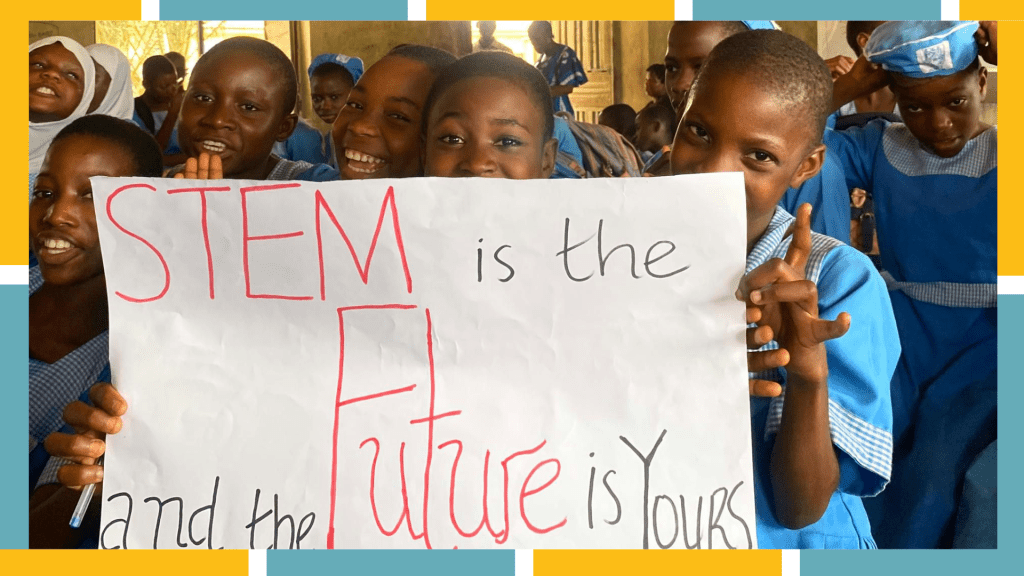
Across Rwanda, Senegal, Kenya, Cameroon, Zimbabwe, Nigeria, Sudan, Egypt, Ghana, and the Democratic Republic of Congo, university fellows and scholars stepped off campuses and into secondary schools to do something deceptively simple and profoundly powerful: show girls what a future in STEM could look like.
This is the story of Q1 2026; told in numbers, narratives, and the quiet but seismic shifts in the minds of thousands of young women across Africa.
The College to Secondary Program: Closing Africa’s STEM Gender Gap, One School at a Time
The College to Secondary Program is WAAW Foundation’s flagship girls-in-STEM initiative. It bridges the gap between university-level talent and secondary school aspiration by deploying trained fellows into schools to deliver hands-on STEM sessions, mentorship conversations, and real-world career exposure.
In Q1 alone, 37 outreach sessions were delivered across 32 schools — government, faith-based, and private — ensuring that access to STEM inspiration wasn’t limited by geography, school type, or socioeconomic background.
The Data Behind the Change
The most compelling metric from Q1 is what happened before and after each session.
Before sessions began, only 1,135 girls reported genuine interest in pursuing STEM. After the outreach sessions concluded, that number nearly doubled to 2,159 — a staggering shift driven entirely by storytelling, peer mentorship, and hands-on engagement.
This isn’t just a statistic. It’s evidence that representation works. When young girls see women who look like them — women from the same continent, who attended similar schools and dreamed similar dreams — actively thriving in STEM fields, something shifts. Possibility becomes personal.
Teachers: From Observers to Advocates
One of the most unexpected and exciting outcomes of Q1 was the level of teacher engagement. Educators were not passive bystanders during outreach sessions. They leaned in. They asked questions. They engaged with foundational STEM concepts alongside their students.
By the end of Q1, 159 teachers had directly joined and supported WAAW’s outreach activities — a sign that the C2S program is not just changing students’ trajectories, but cultivating a wider ecosystem of STEM advocates within schools themselves.
When teachers become champions of girls’ STEM education, the ripple effect is immeasurable.
Chapter Spotlights: Celebrating Africa’s Most Impactful STEM Leaders
Behind every outreach session is a chapter — a group of dedicated university students who volunteer their time, energy, and expertise to make the C2S program work. This quarter, four chapters were recognised for exceptional contributions to girls in STEM education across Africa.
STEM Outreach Chapter of the Month — February
Obafemi Awolowo University, Nigeria took home February’s STEM Outreach of the Month award for delivering the highest number of outreach sessions across all active chapters. OAU’s fellows demonstrated that consistent, high-volume engagement is possible even within the demands of university life.
Girls in STEM Champion — March
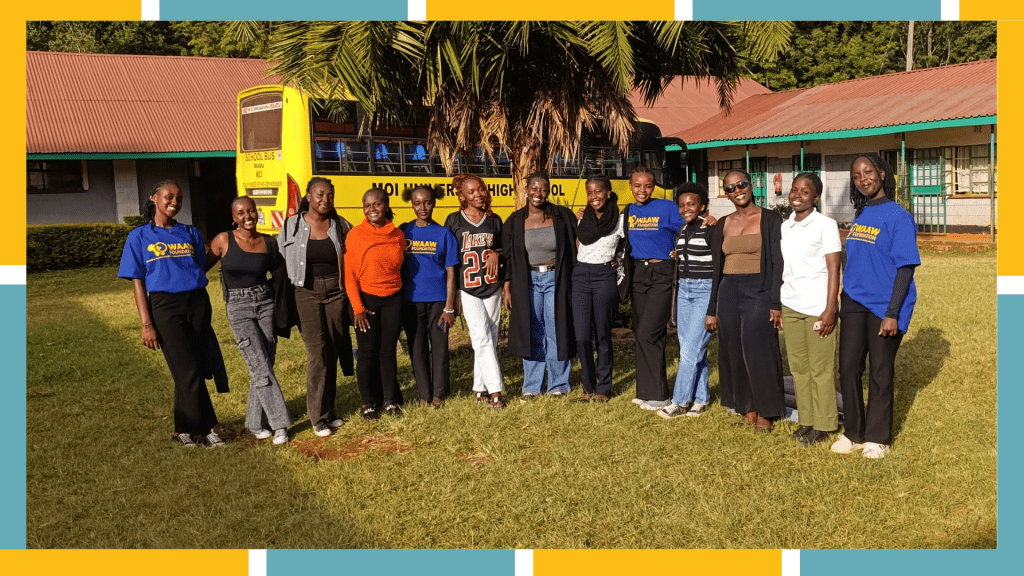
Moi University, Kenya was awarded the Girls in STEM Champion Award for March, recognising exceptional commitment to inspiring, mentoring, and engaging girls in STEM fields. Moi University’s chapter exemplified what it means to go beyond outreach numbers and invest in genuine connection with the next generation of African women in science.
Budding Chapter of the Month
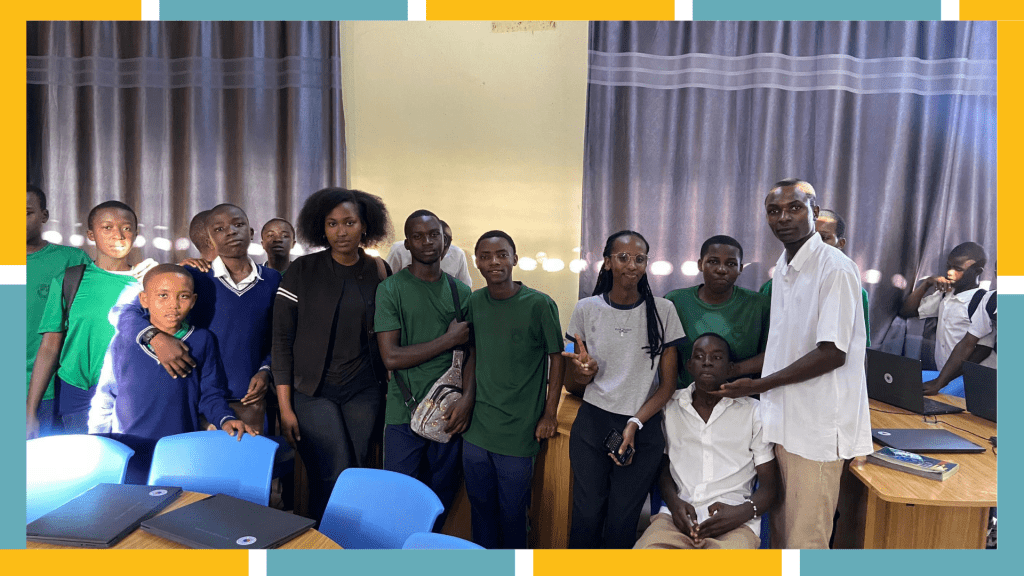
Adventist University of Central Africa, Rwanda was celebrated as the Budding Chapter of the Month — a recognition for emerging chapters demonstrating strong early momentum and growing community impact.
Rising Chapter Award
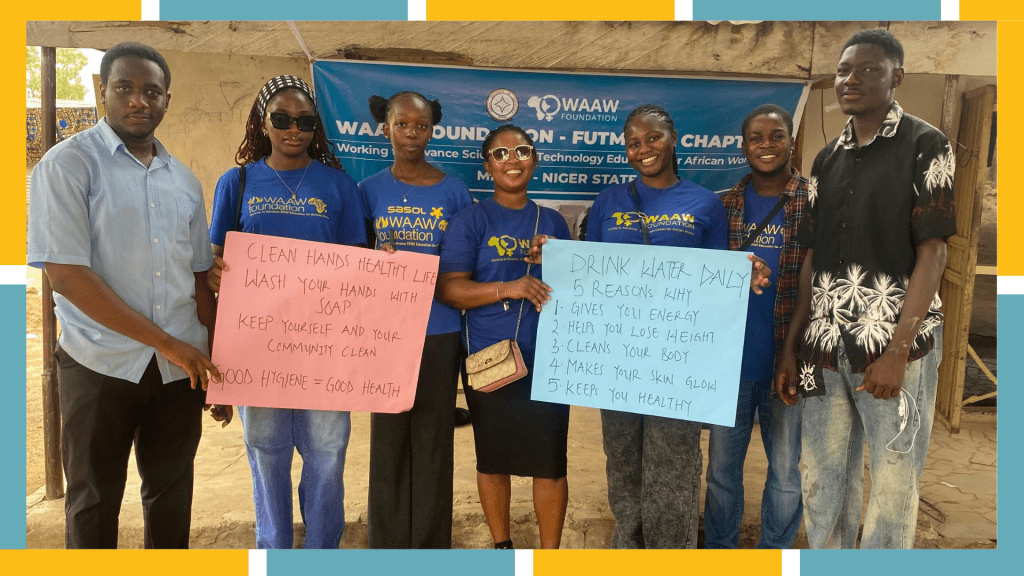
Federal University of Technology, Minna, Nigeria earned the Rising Chapter Award for demonstrating significant growth, expanding reach, and increasing impact across Q1 — a chapter to watch in the coming quarters.
Investing in the Future: The WAAW Alumni Learning Series
WAAW Foundation’s commitment to African women in STEM doesn’t end at graduation. This quarter marked the launch of the WAAW Alumni Learning Series — a webinar-based programme designed to support early-career graduates and advancing professionals who are part of the WAAW alumni network.
The philosophy is simple but powerful: pipeline investment must be continuous. Whether a woman is sitting in a secondary school classroom, navigating her first year at university, or stepping into her first professional role, WAAW wants to be there.
Scholarship Application Workshop: Partnering with ScholarWaka
To kick off the Alumni Learning Series, WAAW partnered with ScholarWaka to deliver a 3-session Scholarship Application Workshop. The workshop equipped participants with practical, actionable skills to compete for global scholarship opportunities — a critical area for African women pursuing advanced education and research careers.
Topics covered included:
- Understanding scholarship types and selection criteria
- Finding opportunities through third-party databases and reputable platforms
- What makes applications stand out to international selection committees
- Strategic planning and document preparation (CVs, Letters of Recommendation, personal statements)
- Building a competitive academic and leadership portfolio
- Using AI tools to support and improve application drafts
The feedback was immediate and enthusiastic. Alumni left with clarity on their research direction, stronger confidence in their application materials, and concrete action plans — including curated lists of 10–15 targeted scholarships and strategies to tailor each application to the specific mission of the awarding body.
For African women navigating a global academic landscape, this kind of structured support is not just helpful — it is transformative.
Stronger Fellows, Stronger Impact: Monthly Meet-Ups Drive Chapter Excellence
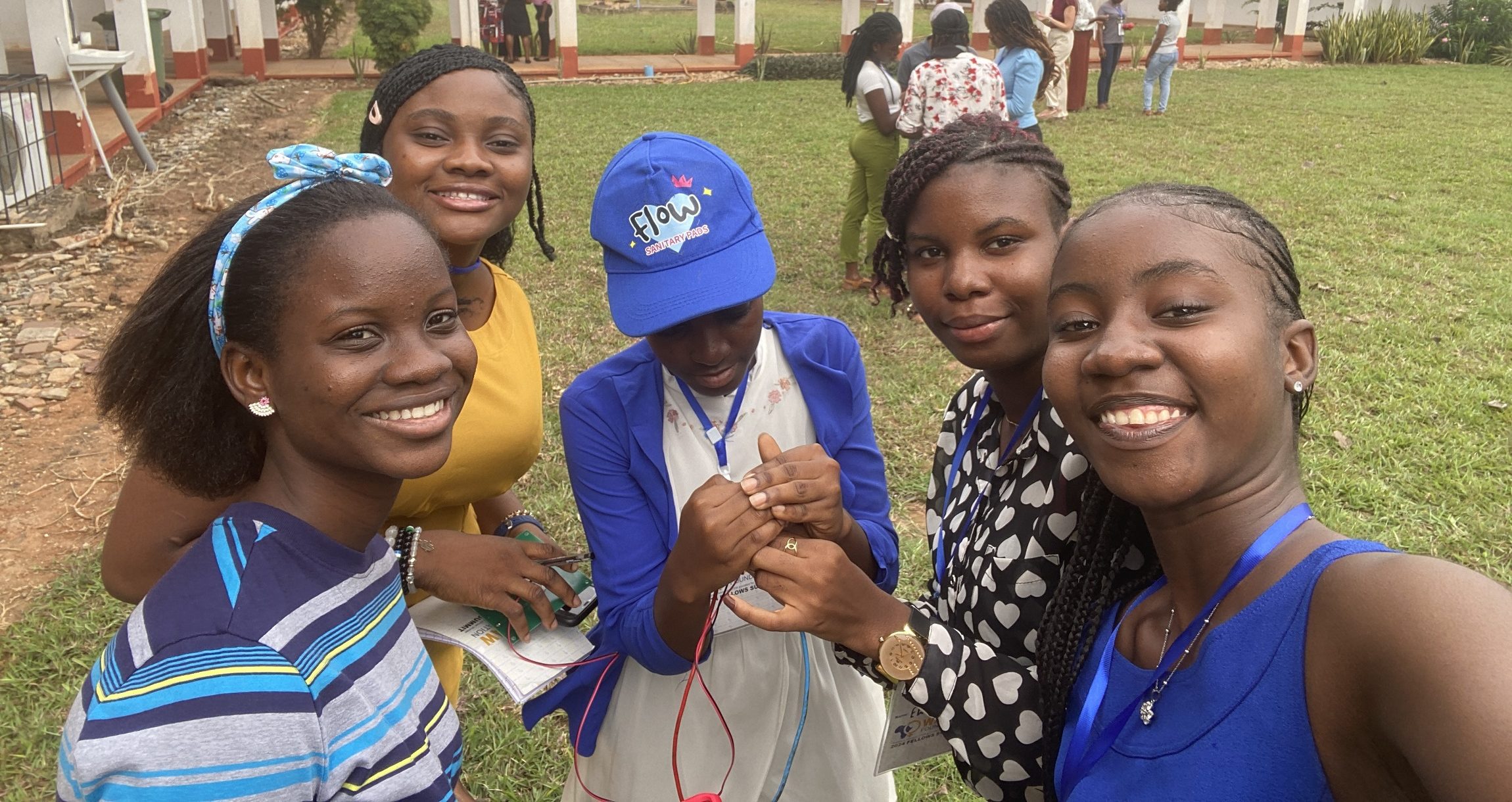
The quality of WAAW’s outreach is directly tied to the strength of its fellows. Throughout Q1, monthly Fellows Meet-Ups created a consistent platform for alignment, skill-building, and community across all 18 active chapters.
Each session was intentionally designed to address both programme performance and personal growth — because WAAW knows that empowered fellows empower students.
January: Setting the Pace for 2026
The year opened with a session themed “Setting the Pace for Impact: 2026 Outreach Goals, Reporting Standards, and Personal Growth.” Fellows were guided through outreach planning frameworks, STEM activity integration, and effective mentorship techniques for young girls. Critically, clear performance and reporting standards were established — ensuring every chapter operates with consistency, quality, and accountability.
The session also gathered insights into fellows’ learning interests — coding, programming, content creation — which directly shaped the agenda for future sessions.
February: Vision to Impact with The Cirble Group
February’s meet-up, themed “Vision to Impact: Redefining STEM by Closing the Gender Gap,” was delivered in partnership with The Cirble Group. Facilitated by Liz Joseph through powerful storytelling, the session centred on resilience, growth, and consistency — qualities every STEM leader needs.
The session drew an average attendance of 40 fellows and generated strong engagement, with participants leaving equipped with practical action steps for both individual development and chapter performance.
March: Building Careers That Last
The March session, “Building a Career that Lasts: Thriving as a Woman in STEM,” was facilitated by Dr. Ruth Aisabokhae with co-facilitation from Dr. Felicia Wheatfall and Lucy Ikpesu-Ewhubare. Through personal stories and practical guidance, fellows explored visibility, confidence, and strategic career positioning in STEM fields.
The message resonated: navigating STEM as a woman in Africa requires not just technical skill, but visibility, voice, and community — all of which WAAW is actively building.
The Bigger Picture: Why This Work Matters
Africa’s future is inextricably linked to STEM. From climate adaptation to digital infrastructure, from healthcare innovation to agricultural technology — the solutions the continent needs will come from scientists, engineers, technologists, and mathematicians. And for too long, the women who could be building those solutions have been left out of the room.
WAAW Foundation’s Q1 2026 results are more than programme metrics. They are proof that targeted, community-driven, representation-led STEM education can move the needle — fast. In just 90 days, thousands of girls across ten countries were shown that STEM belongs to them too.
The interest doubled. The teachers showed up. The fellows showed up. And the girls? They are paying attention.
Q2 is already underway. Watch this space.
About WAAW Foundation
WAAW (Working to Advance STEM Education for African Women) Foundation is a pan-African nonprofit dedicated to increasing the number of African women who pursue and thrive in STEM education and careers. Through its College to Secondary Program, Alumni Learning Series, and Fellows development initiatives, WAAW is building a pipeline of African women changemakers in science, technology, engineering, and mathematics.