
International Day of Education: How Youth Are Co-Creating Education Across Africa
Education is often treated as something that is delivered by institutions, educators, and systems designed far from the realities of the learners themselves.
But the International Day of Education 2026 theme,
“The power of youth in co-creating education,”
challenges that narrative.
At WAAW Foundation, youth-led education isn’t an idea. It’s our model.
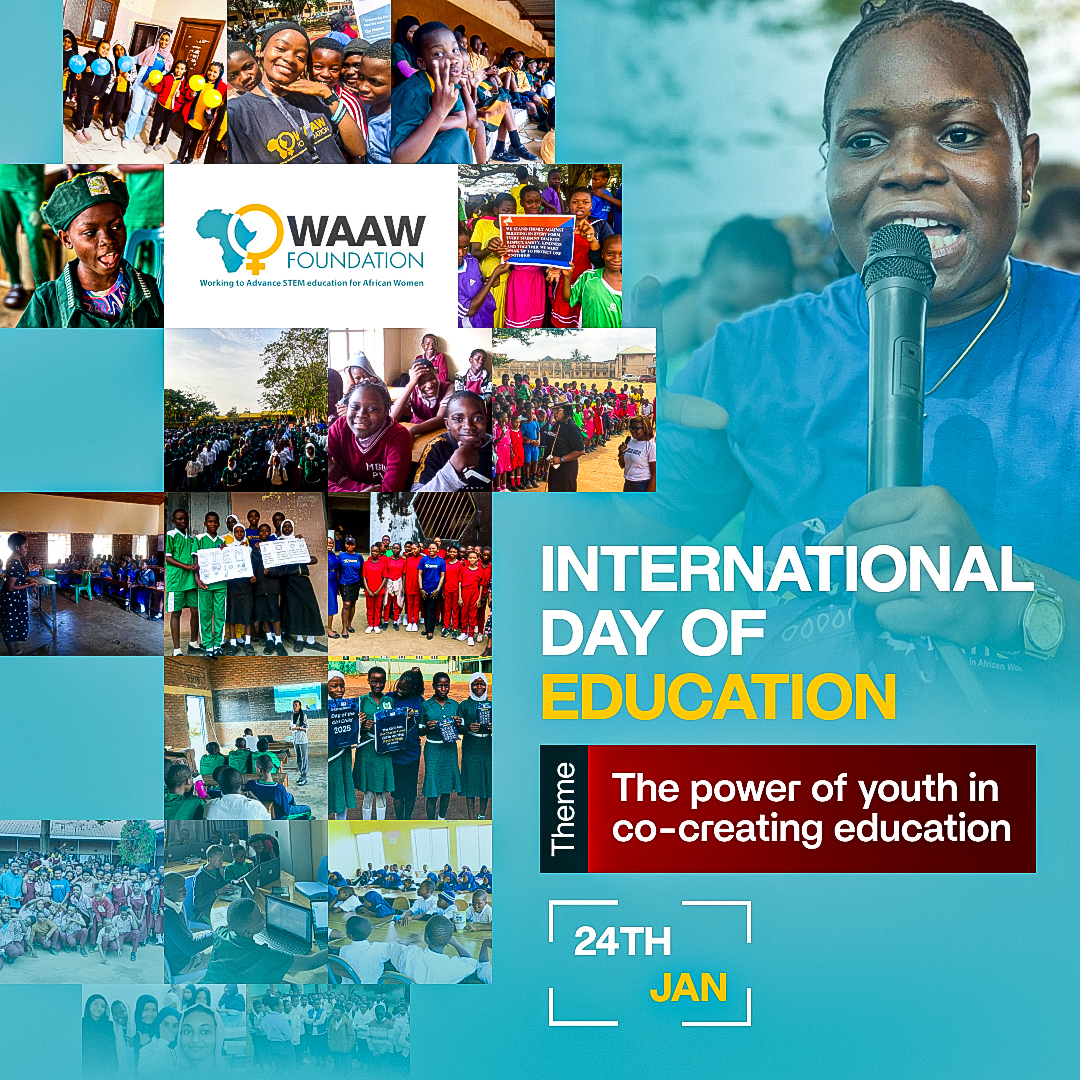
Across Africa, young women in STEM are not only accessing education, they are actively shaping it, delivering it, and multiplying its impact within their communities.
From Students to Educators
WAAW scholars are trained not just to succeed academically, but to give back intentionally.
Every scholar commits to mentoring and leading STEM outreach sessions for secondary school students. A university student studying engineering, computer science, or biotechnology today becomes a mentor, teacher, and role model tomorrow.
This is what youth co-creating education looks like in practice:
Young women designing STEM workshops, adapting lessons to local contexts, and teaching students who see themselves reflected in their mentors.
Education becomes relatable. Achievable. Transformational.
Why Youth-Led STEM Education Works
Peer-to-peer education has proven impact.
When a secondary school student learns from a slightly older university student from her own community, STEM stops feeling distant or unattainable. The path becomes visible.
This approach strengthens education systems by:
-
Increasing girls’ interest in STEM careers
-
Building local leadership and mentorship pipelines
-
Creating sustainable, community-driven learning models
Youth-led education doesn’t replace traditional systems — it reinforces them.
The Impact So Far
Since inception, WAAW Foundation’s youth-led STEM education model has:
-
Supported 196 scholars
-
Trained 1,512 university fellows
-
Built 113 university chapters
-
Operated across 29 African countries
-
Reached 63,570 secondary school students through peer mentorship
Each number represents young people teaching young people — co-creating educational access where it previously didn’t exist.
Education That Multiplies Impact
Traditional education programs often stop at access: one scholarship, one graduate.
WAAW’s model goes further.
One scholar becomes a mentor.
One mentor reaches hundreds of students.
Those students begin to imagine themselves as future scientists, engineers, and innovators.
This is how education shifts from linear to exponential.
The Future of Education Is Youth-Driven
On this International Day of Education, we reaffirm a simple truth:
The future of education doesn’t live only in policy rooms or classrooms.
It lives in young people who are bold enough to teach while they’re still learning and committed enough to lift others as they rise.
At WAAW Foundation, we will continue investing in youth not just as beneficiaries of education, but as co-creators of Africa’s STEM future.
Because when young people shape education, they don’t just improve outcomes, they transform generations.